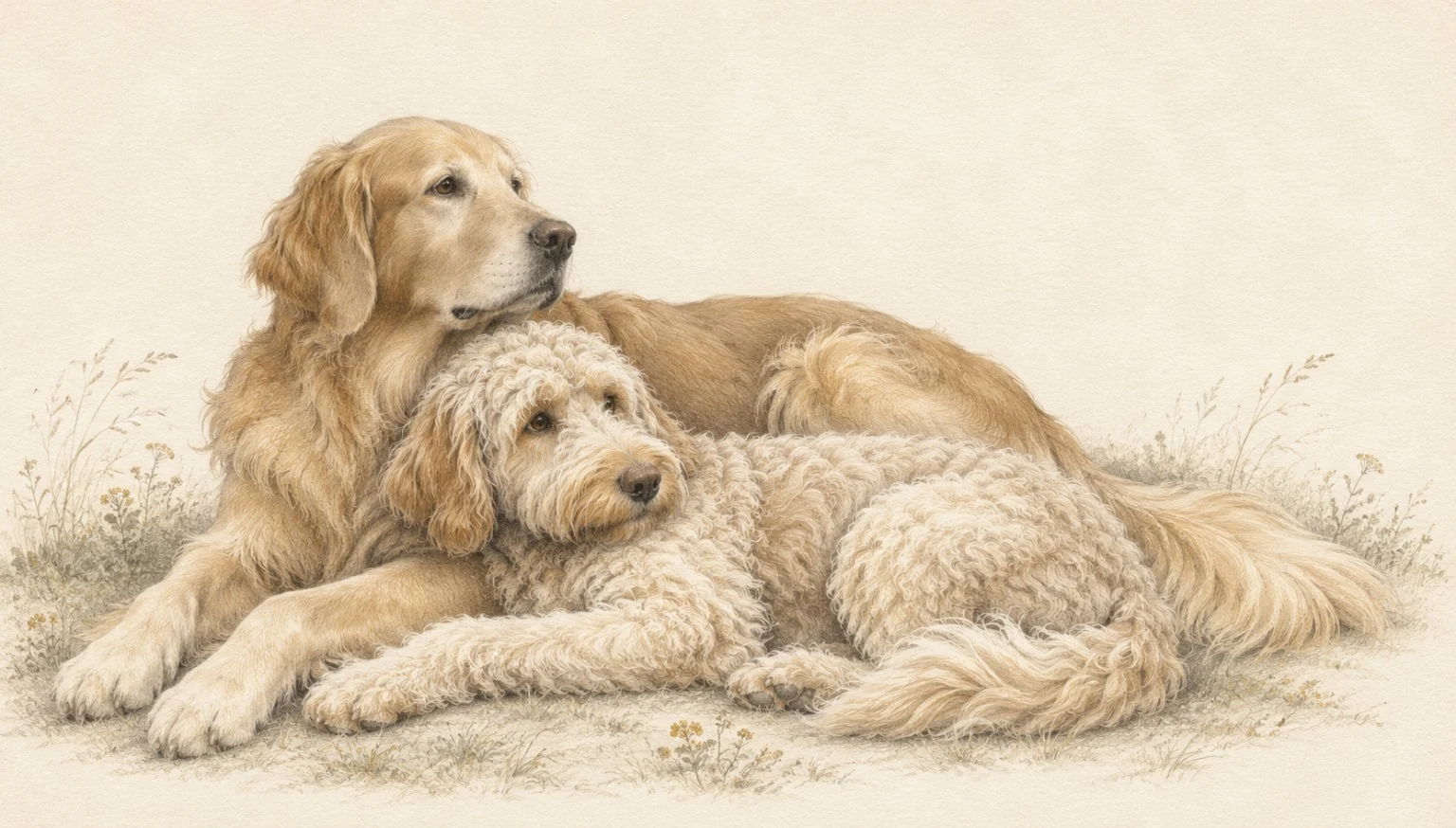
Helping doesn’t always mean adding more.
The walk is over. You’ve made time for your dog. Yet they’re still moving between the window and the kitchen. What might help now?
$420 total · Phase Two
6 live, online classes · 90 minutes each · 9 hours together
Saturdays · 10:00–11:30 a.m. Eastern
December 12 and 19, 2026; January 2, 9, 16 and 23, 2027. No class December 26.
Request Phase Two detailsInterest request only. It does not enroll you, charge you or reserve a place.
Phase Two explores recovery as part of ordinary life: comfortable rest, gentle movement and contact your dog is free to choose. Learn to consider what fits the moment instead of reaching for one more task.
Recognize when less may be useful.
Explore the surroundings, remaining demands and opportunities for undisturbed rest.
See recovery as more than stillness.
Consider gentle movement and low-demand engagement without trying to wear your dog out.
Let contact remain a choice.
Practice invitation-based thinking, including how to notice withdrawal and leave room for space.
Practice the next decision.
Follow everyday scenes as they unfold. Consider whether to reduce a demand, offer gentle movement, invite contact or leave rest alone. Observe new information and practice changing your mind when the situation changes.
Lorrie teaches each class live online. You’ll work through familiar situations, guided practice, reflection and questions, then revisit a choice as new details appear.
You can speak, use chat, practice seated or reflect quietly. Learning does not depend on putting your dog on camera or creating a difficult situation.
More than the time we spend together.
The class series is supported by written and printable materials, provided alongside the lessons so you can revisit the ideas and reflect in your own way.
Illustrated Field Guides and guided examples
Follow the lesson’s teaching and unfolding scenes. Text equivalents let you follow the examples without relying only on the pictures.
Private worksheets with sample answers
Think through observations and choices with examples and reasoning to help you begin. Your private worksheet is yours to keep.
Separate accountability check-ins
Use a short check-in to record what you noticed or tried. “Not tried yet” is a valid response; individual feedback is not included.
Full Reader Versions and a six-chapter mini-book
Return to the teaching in full prose, then follow the ideas across the complete phase book. These are reading materials, not an audio or recording package.
Six classes. More ways to consider recovery.
Explore passive recovery, active recovery and invitation-based contact across the full Phase Two series.
Coming Home Without Switching Off
Explore the transition from activity to recovery without mistaking lying down for rest.
Helping Without Adding More
Consider fewer demands, the surroundings and comfortable opportunities to rest.
Invited Touch and the Right to Leave
Learn the difference between inviting contact and reaching for it. Leaving remains an option.
Recovery Through Gentle Movement
Explore manageable movement guided by your dog’s response, not one correct rhythm.
Choosing the Next Step
Practice deciding whether to reduce demands, move gently, pause or finish.
A Recovery Rhythm for Ordinary Life
Consider one realistic change to an ordinary day and what to observe next.
Is this a fit for you?
Choose Phase Two if you want to understand what recovery could look like for your dog, including the moments when another activity or more contact may not be the answer.
- Do I need to take Phase One first?
- No. Phase Two is a separate theme, not a higher level. Essential context is part of each class.
- What if my dog doesn’t want touch?
- Touch is optional, not a test to pass. No dog needs to accept contact or become distressed to participate in the learning.
- Is this one routine for every dog?
- No. You’ll practice considering the individual dog, the surroundings and the response. There is no fixed recovery recipe or promised result.
- Do I have to share personal stories?
- No. You can work with the class examples, keep your worksheet private and choose quiet reflection. Any community sharing is optional.
- Are the classes recorded?
- No. Classes are not recorded. The Field Guides, Reader Versions and mini-book support reading and review; they do not replace the live guided experience.
Make space for a different kind of help.
Phase Two is $420 total for six live classes and the companion materials. It stands on its own; you do not need to take Phase One first. Request the enrollment details and decide after reviewing them.
Request Phase Two detailsLorrie will follow up before you decide. This request does not enroll you or reserve a place.
Guardian education, not diagnosis or treatment. If your dog has a bite history or you have an immediate safety concern, contact Lorrie before joining a group. Discuss health concerns with your veterinarian.
Taught live online by Lorrie J. Harris of Coaching Canine Companions. Open to adults in the United States. Compare both phases.